[By Bhanu Dhamija]
[A version of this article was published on The Quint website on 6 November 2026.]
“Whatever else you may copy from our Constitution,” American President Harry Truman advised India’s constitutional adviser, B.N. Rau, in 1947, “do not copy our provision for midterm elections.”
Rau apparently did not take Truman’s advice seriously. He was merely on a courtesy visit to the White House. Before leaving for America, he had already submitted his draft Constitution to India’s Constituent Assembly.
Truman, too, may not have been entirely serious. He was still smarting from his party’s devastating defeat in the 1946 midterm elections. Democrats had lost 55 seats in the House of Representatives and 12 in the Senate. Truman’s approval rating had plunged from an extraordinary 87% when he took office in 1945 to just 32% on the eve of the elections. Americans were fed up with his policies, which had contributed to high inflation, severe consumer shortages, and widespread labor strikes. The Republicans capitalized on this discontent with their punchy campaign slogan: “Had Enough?”
The defeat forced Truman to change course. He repaired relations with labor unions by vigorously opposing anti-labor legislation, reached out to African-Americans by advancing civil rights, and won support among Jewish voters by quickly recognizing the new state of Israel. In 1948, he was re-elected President in one of the most celebrated upset victories in American political history.
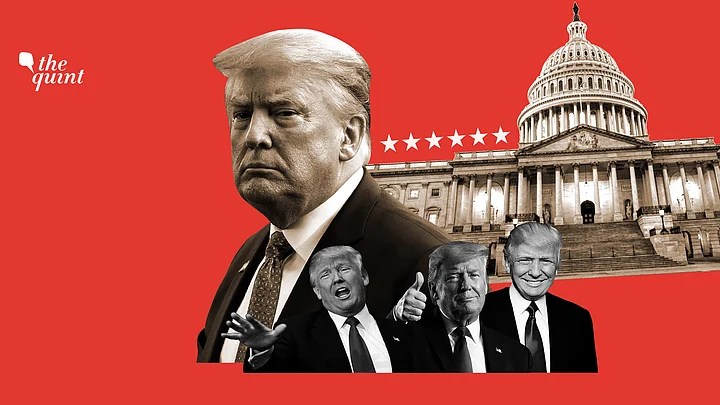
The recent midterm elections have delivered a similarly historic defeat to President Donald Trump’s Republican Party. Democrats have regained control of Congress, flipping at least seven Senate seats and 39 House seats. Americans were fed up with Trump’s authoritarian style, vanity projects, and use of the presidency to advance his family’s business interests. His policies, particularly tariffs and the war with Iran, worsened inflation, while his use of force against illegal immigrants offended the public’s sense of decency and liberal values. On the eve of the elections, his approval rating stood at just 38%.
Executive Forced to Change Course
Such defeats of the President’s party are hardly unusual in American midterm elections. In 18 of the 20 midterms held between 1946 and 2022, the party occupying the White House lost seats in the House of Representatives. The average loss was 26 seats.
Almost always, these defeats force Presidents to reconsider their policies and political strategies. In 1994, after President Bill Clinton’s Democratic Party lost 54 House seats and control of both chambers of Congress for the first time in 40 years, he famously changed course. He sought a middle ground between liberals demanding greater government spending and conservatives calling for smaller government, declaring, “The era of big government is over.”
In 2006, public exhaustion with the Iraq War cost George W. Bush’s Republican Party control of both chambers. Bush was forced to make an immediate change in his national security leadership. He dismissed his controversial Defense Secretary, Donald Rumsfeld, and reshuffled his foreign policy team.
Barack Obama described his party’s loss of 63 House seats in the 2010 midterms as a “shellacking.” The defeat forced him to abandon much of his ambition for sweeping legislative initiatives, like the Affordable Care Act.
Trump has experienced this political reality before. In 2018, when Republicans lost 41 House seats, his legislative ambitions came to an abrupt halt. The opposition blocked further legislative overhauls and instead launched a series of investigations into his administration. He was subsequently impeached twice.
Most Effective Safeguard
Midterm elections are perhaps the American political system’s most effective safeguard against authoritarianism. They give voters an opportunity to alter the balance of political power in Washington halfway through a President’s term. By electing a different Congress, Americans can effectively put the brakes on presidential ambitions.
This safeguard works because the President has no legislative authority of his own and faces substantial constitutional limitations on executive power. Only Congress can pass laws, authorize spending, and approve presidential appointments to senior government positions, including the federal judiciary.
An opposition-controlled Congress can simply refuse to cooperate. More consequentially, it can investigate questionable decisions, expose abuses of power, restrict funding, reject legislation, and exercise its constitutional authority to impeach and remove the President. The President, meanwhile, cannot dissolve Congress or alter the constitutionally prescribed election schedule.
The American founders understood the dangers of unchecked political power. They believed that “where annual elections end, tyranny begins.” They therefore designed a system in which congressional elections take place every two years, halfway through each presidential term. Voters elect all 435 members of the House of Representatives and approximately one-third of the Senate at each election. As a result, the political composition of Congress can change dramatically even while a President remains in office.
Referendum on Executive Performance
Midterm elections are, in effect, a referendum on the President’s performance and the direction of the country. They serve as an institutional reset button. The combination of fixed presidential terms, independently elected legislators, and regularly scheduled midterm elections provides a formidable institutional defense against misguided policies and authoritarianism.
Critics of this system argue that divided government produces political gridlock, making it difficult for the government to respond effectively to urgent national challenges. However, the American constitutional framework deliberately places a higher premium on preventing tyranny than on ensuring administrative efficiency.
I have long argued that the Indian people would be better served by adopting an American-style presidential system. Under India’s present parliamentary arrangement, executive authority is inadequately checked, power is excessively centralized, and the elections are too far apart. These are hardly the ingredients of a robust democracy.

