[Excerpts of article published on The Wall Street Journal website on 25 August 2023.]
It’s bad today, but it’s been worse before, and it will be better ahead. Change is coming. We don’t know precisely when, but it’s coming.
By Karl Rove
America is deeply divided. Our politics is broken, marked by anger, contempt and distrust. We must acknowledge that reality but not lose historical perspective. It’s bad now, but it’s been worse before—and not only during the Civil War.
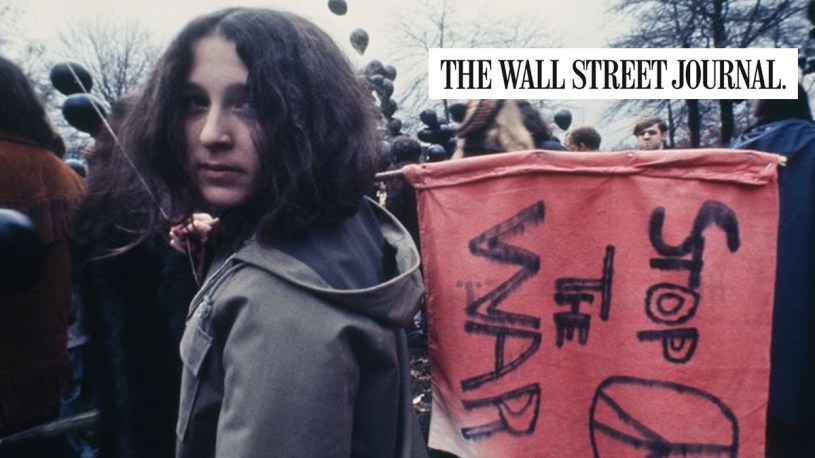
Let’s look backward and start with the mid-1960s to early ’70s. The nation was bitterly divided over civil rights, the “sexual revolution” and an increasingly unpopular war in Southeast Asia.
…
Two presidents were driven from office during this period. Lyndon B. Johnson opted against seeking re-election in 1968 because of the war. Richard Nixon, facing impeachment over Watergate, resigned in 1974.
In the early 1930s, 1 in 4 Americans was unemployed. Populism emerged on both ends of the spectrum. On the left, Huey Long, proclaimed “every man a king,” threatened confiscation of wealth, and preached class hatred until he was assassinated in 1935. On the right, Father Charles Coughlin, the “Radio Priest,” blamed the Depression on bankers and Jews in nationwide broadcasts from Detroit. Journalist Eric Sevareid recalled that in 1933 “every day the headlines spoke of riots, of millions thrown out of work, of mass migrations by the desperate.” Historian Wendy L. Wall describes the late 1930s as “marked by sit-down strikes, violent repression of workers, and attacks by vigilante groups on Jews, Catholics, racial minorities, and leftists.”
The Gilded Age is often overlooked as a time of division, but Republicans and Democrats hated each other. They were still fighting the Civil War by political means. President Ulysses S. Grant’s 1872 re-election was followed by five consecutive presidential contests in which no winner received a popular-vote majority. Less than 1 percentage point separated the two candidates in three elections. In two of the five races, the winning candidate failed to earn a plurality of popular vote because the black Republican vote was suppressed by violence hard for modern minds to grasp.
…
These decades of animus followed America’s first claim of a stolen presidential election. Andrew Jackson led in 1824’s four-way race with 41% of the popular vote and carried 11 states, but with 99 electoral votes came up 33 short of a majority. The contest went to the House, with each state’s delegation having one vote. On Feb. 9, 1825, the House seated John Quincy Adams—the runner-up with 84 electoral votes—with 13 states to seven for Jackson and four for Treasury Secretary William Crawford. Jackson and his supporters raged at Adams and Speaker Henry Clay, who led his followers into the Adams camp and was later made secretary of state. The “rights of the people have been bartered for promises of office,” Jackson wrote. He spent the next four years condemning the “corrupt bargain” that “operated to deprive the people of their right of free election” and defeated Adams in 1828.
The 1800 election, between Thomas Jefferson and John Adams, was among the most acrimonious in the nation’s history. Historian James Roger Sharp writes that “vicious personal attacks, portents of doom and disaster if one or another of the opponents were to be elected, and scurrilous rumors of betrayal and intrigue pervaded every aspect of the contest.” Each side believed the other’s election “would threaten the very existence of the republic.” This wasn’t fanciful partisan rhetoric: There was “real potential for violence and the possible disintegration of the union.”
…
So what ended these periods of broken politics? Convulsive events such as World War II played a role. More important, adroit leadership—the kind we saw with Jefferson, Lincoln, Franklin D. Roosevelt and Ronald Reagan—clearly mattered. They set a tone that led to healing.
But most of the credit goes to the American people, who make mistakes but have always found their way back to true north. They have often tolerated our country’s politics being angry, hyperpartisan and divisive; in some instances, they are the driving force behind polarization, with the political class reflecting the public’s unchecked passions. But that lasts only for a season. Their good common sense eventually brings them to vote for change, determined to reshape our politics in healthier, more constructive ways.
Polls show a clear majority of voters are unhappy with today’s politics, its ugly practices and the front-runners offered for 2024. So don’t grow weary or discouraged. It’s bad today, but it’s been worse before, and it will be better ahead. Change is coming. We don’t know precisely when, but it’s coming. The better angels of our nature as Americans will emerge and win out.
Mr. Rove is a Wall Street Journal columnist, and author of “The Triumph of William McKinley” (Simon & Schuster, 2015).
 Presidential System